
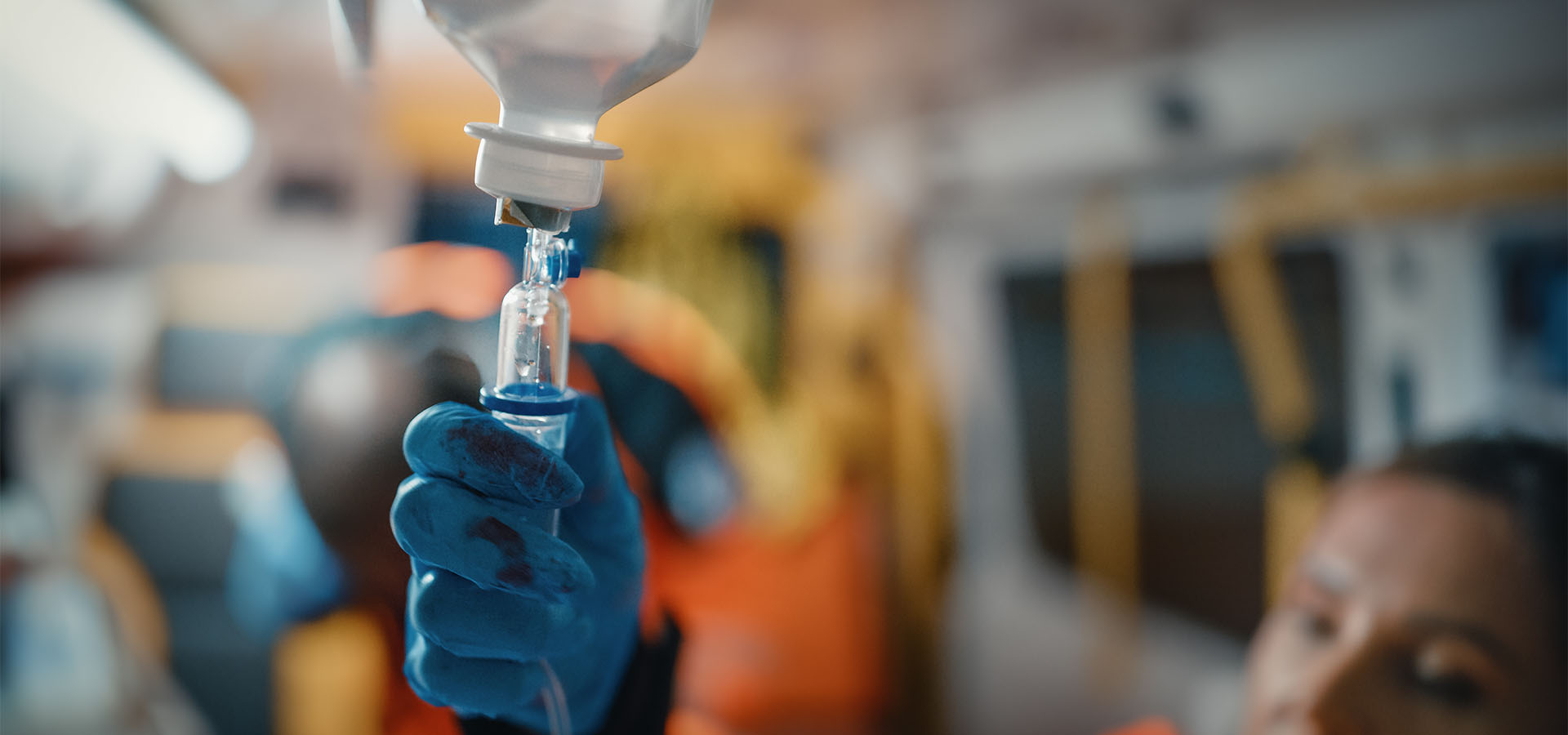
Burn care myths EMS providers must know—fluid rates, cooling risks, IV access, and when to transport patients directly to a burn center.
FieldBrief Issue 2
Published June 11, 2026
Burn Care MythBusters: What First Responders Need to Know
Burn care recommendations continue to evolve. We asked MetroHealth Trauma Surgeon Casey Kohler, MD, to break down common burn resuscitation myths EMS providers still encounter in the field.
Myth #1: Use the Parkland or ABA Consensus Formula For Fluid Resuscitation at the Scene
Fact: Use TBSA and the patient’s age to determine the initial starting rate.
For burns covering 20% total body surface area (TBSA) or more, EMS crews should use age-based starting rates rather than calculating fluid needs in the field.
Initial Fluid Rates
To calculate the initial starting rate, use the Rule of Nines to determine whether the patient is greater than a 20% burn (see related article). If 20% or greater start them at:
- Age 14 and older: 500 cc/hour
- Ages 6-13: 250 cc/hour
- Under age 6: 25 cc/hour
“The initial starting rate is essentially half of what it would be with the Parkland Formula,” Dr. Kohler adds. “Too much fluid can contribute to lung, kidney and cardiac complications. Just leave them on the initial starting rate and get them to the hospital promptly.”
If less than 20%, IV resuscitation is usually not necessary in the field. Maintenance or oral fluids are OK. Fluid choice matters, too.
Myth #2: Normal Saline is Optimal for Resuscitation
Fact: Lactated Ringer’s is preferred for burn resuscitation.
“Lactated Ringer’s is much closer to human plasma than normal saline,” Dr. Kohler says. “Too much normal saline will make your patient acidotic, and you’ll cause kidney injuries.”
If Lactated Ringer’s is unavailable, normal saline is acceptable.
Myth #3: Cooling Burns Helps for Long Periods
Fact: Prolonged cooling can increase the risk of hypothermia
Cooling burned skin briefly with cool water may help shortly after an injury, but aggressive or extended cooling can quickly lower body temperature — especially in pediatric or elderly patients.
“Hypothermia becomes a big problem when we’re providing treatment in the burn center,” Dr. Kohler says.
Use warm, sterile blankets to help prevent hypothermia.
Myth #4: You Can’t Put IVs Through Burn Blisters
Fact: You can put an IV through burned skin if that’s your only option.
Blisters help protect underlying tissue and lower the risk of infection.
“Ideally, we would like the IV through not-burned skin,” Dr. Kohler says. “But having an IV is better than not having one.”
Myth #5: Always Take Burn Patients to the Nearest Trauma Center
Fact: Some burn patients should go directly to a verified burn center.
Patients may need specialized care depending on:
- Burn size and depth
- Age
- Inhalation injury
- Location of the injury (hands, feet, face or genitalia)
- Electrical injuries or chemical burns
When possible, transport patients who meet burn center criteria directly to a burn center, especially for electrical injuries or chemical burns.
Early communication with the receiving facility can also help streamline care and improve outcomes.
To claim EMS Continuing Education for this edition of FieldBrief, please visit metrohealth.org/fieldbrief and complete a brief survey. The survey link is located below the list of articles.
MetroHealth Medical Center is a State of Ohio Approved Continuing Education Site #1202
Key Takeaways
- Avoid complex formulas in the field—use simple, age-based fluid rates.
- Don’t overdo fluids—less is safer initially.
- Lactated Ringer’s is the fluid of choice.
- Prevent hypothermia during burn care.
- Focus on access and destination decisions.