
Keep kids safe this summer in Northeast Ohio. Learn the top 5 summer injuries, how to treat them, and when to visit the ER.
Published May 27, 2026
Contributed by: Charles Emerman, MD, FACEP / Chair, Department of Emergency Medicine
Top 5 Summer Injuries in Kids and How to Treat Them
Summertime in Northeast Ohio draws families outside to enjoy the parks, Lake Erie and their neighborhoods.
“Although this season brings an increased chance of injuries, you can make your summer safer and happier if you plan and know how to treat them,” said Charles Emerman, MD, FACEP, Chair of the department of Emergency Medicine at The MetroHealth System.
“The most common injuries we see during the summer can usually be treated at home or by your child’s pediatric provider, but there are times when a visit to the Emergency Department is necessary,” he explained.
“We are here 24 hours a day, seven days a week to treat the most serious injuries.”
#1: Bee Stings
Typical stings cause reactions at the site of the sting only. Those reactions can be treated with over-the-counter antihistamines, such as Benadryl, and ice. If your child has a history of serious reactions, you should carry an emergency epinephrine medication, such as an Epi Pen.
- When to call your pediatric provider: If your child has pain, swelling or a rash that goes beyond the site of the sting, make an appointment with your child’s pediatrician or go to Express Care.
- When to go to the Emergency Department: Get help right away if your child has trouble breathing, feels like their throat is closing or has swelling around the mouth.
Bonus tip: Note that bee sting allergies usually show up after the second or third sting, not on the first. If you have a history of bee sting allergies in your family, carry over-the-counter antihistamines with you.
#2: Cuts and Scrapes
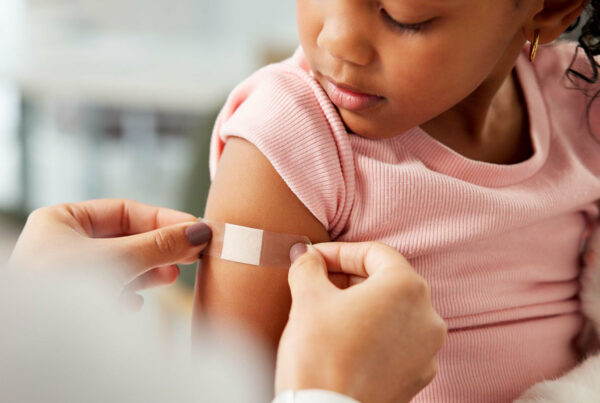
Skinned elbows and knees are a part of childhood. If there is active bleeding, apply pressure for 10 minutes with a clean cloth. Be sure to clean any cuts and scrapes by washing them with soap and water or antiseptic wash, such as Betadine, and cover them with a bandage.
- When to call your pediatric provider: If the injury is warm to the touch, has pus or streaks of red, it could be infected. Make an appointment with your child’s pediatrician or go to Express Care.
- When to go to the Emergency Department: If bleeding won’t stop after 10 minutes of pressure, your child might need stitches and a trip to the Emergency Department.
#3: Head Injuries
Kids bump their heads, and usually there’s no cause for concern. If there’s a “goose egg” bump, treat it with ice and a little rest.
- When to go to the Emergency Department: If your child was knocked unconscious, acts abnormally, vomits repeatedly or has a difference in the size of the pupils in their eyes, go to the Emergency Department.
#4: Sprains and Strains
Arms, ankles and wrists are often injured during summer activities.
- When to go to your pediatric provider: If your child heard a pop or a crack when the injury happened, if your child can’t move or put weight on the injured area, or if there is swelling and tenderness over the bone then they likely need x-rays. If you go to an Express Care call first to ensure they can take those.
- When to go to the Emergency Department: If your child needs an x-ray, and your pediatrician or Express Care does not offer imaging, go to the Emergency Department.
#5: Heat Exposure
When it’s extremely hot outside (a heat index of over 100), it can become dangerous, especially if kids are playing hard or exerting themselves. The most important thing is for everyone to stay well hydrated: make sure your child drinks water every 30 minutes (even more often if they’re playing organized sports).
- When to go to your pediatric provider: If your child has a sunburn that blisters or is not urinating as often as usual (this could be a sign of dehydration), see your pediatrician or go to Express Care.
- When to go to the Emergency Department: If your child is dizzy, feeling weak, confused, nauseous, or has stopped sweating (a sign of severe dehydration), go to the Emergency Department.
- Bonus tip: Make sure your child wears sunscreen while outside. Reapply according to the directions on the bottle and after water activities.
If it is not an emergency, there are a variety of options in addition to scheduling with their primary care provider such as:
- Metro Express Care for minor illnesses and injuries
- Virtual Urgent Care for convenient access to urgent care wherever you are
- Parma Pediatric Walk-in Clinic – providing care for children with cold/flu like symptoms, respiratory issues, skin conditions and more
Your Questions Answered
Q. How can I treat common summer injuries in kids at home?
A. Many minor summer injuries—such as bee stings, small cuts, and scrapes—can be treated at home with basic first aid. Use ice for swelling, clean wounds with soap and water, and apply over-the-counter medications as needed. Always monitor symptoms to ensure they don’t worsen.
Q. When should I take my child to the ER for an injury?
A. You should go to the Emergency Department if your child has trouble breathing, uncontrolled bleeding, loss of consciousness, repeated vomiting, severe pain, or signs of dehydration like confusion or dizziness.
Q. What are the signs of heat exhaustion in children?
A. Symptoms of heat exhaustion in kids include dizziness, weakness, nausea, excessive sweating, and decreased urination. If your child becomes confused, stops sweating, or cannot stay alert, seek emergency care immediately.